
SPRING RESET: A SUSTAINABLE AND FUNCTIONAL KITCHEN
There is a reason it’s called 'spring cleaning'. The springtime is often the ideal moment to reorganise our space, starting with the natural heart of the home: the kitchen.
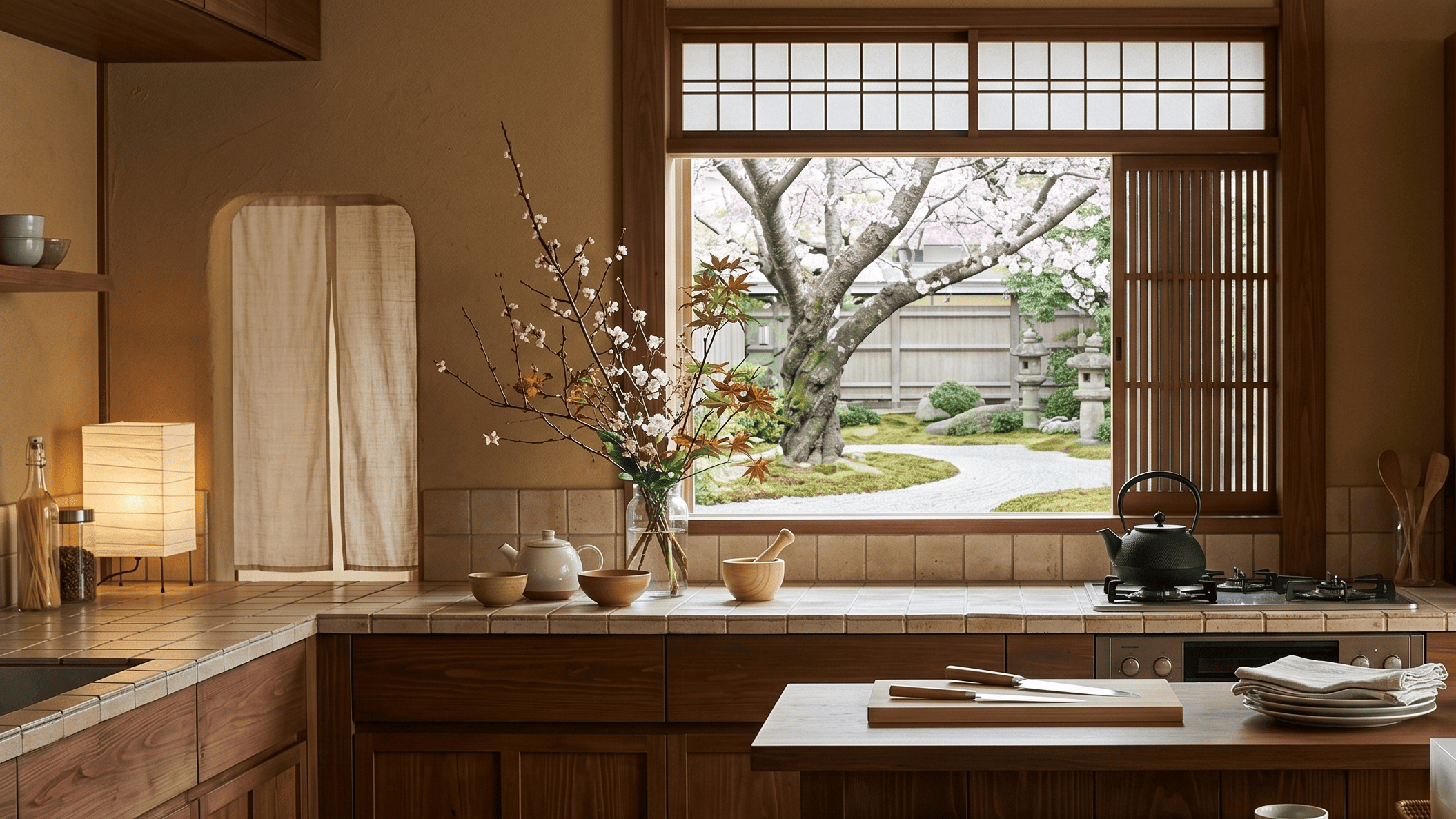
Beyond simply refreshing and organising the pantry, it’s about starting fresh to achieve greater peace of mind. Choosing, sorting, storing, and reorganising can lead to a simpler, more functional, more mindful - and more enjoyable - daily life. It’s a very Japanese custom that shapes the MUJI way of life as the days grow longer.
1. The unexpected benefits of spring cleaning
During the annual big clear-out, known as Oosouji in Japan, the kitchen is often the first place to start - and the most important. Used by the whole household, a room for gathering, sharing and spending time together, whether briefly or at length, it needs to be especially functional. With a clean, clutter-free and well-organised kitchen, daily life becomes simpler, more practical and more efficient. And when it comes to tidying the pantry storage, the positive effects go further: better cooking routines, healthier eating habits, more mindful consumption, financial savings and reduced waste often go hand in hand with tidy cupboards and well-defined spaces. This idea ties in with the Japanese concept of Danshari, a philosophy advocating a simple life, a certain mental clarity and a home free of clutter. It is composed of three kanji: Dan meaning to refuse, Sha meaning to get rid of, and Ri meaning to part with. One keeps only what is beautiful and useful to purify one’s environment and free one’s mind. Ultimately, this transformation can affect all aspects of life, leading to a more harmonious and balanced existence. A ‘simple’ tidying of the kitchen… with profound consequences.
2. Clearing out and cleaning with the right tools
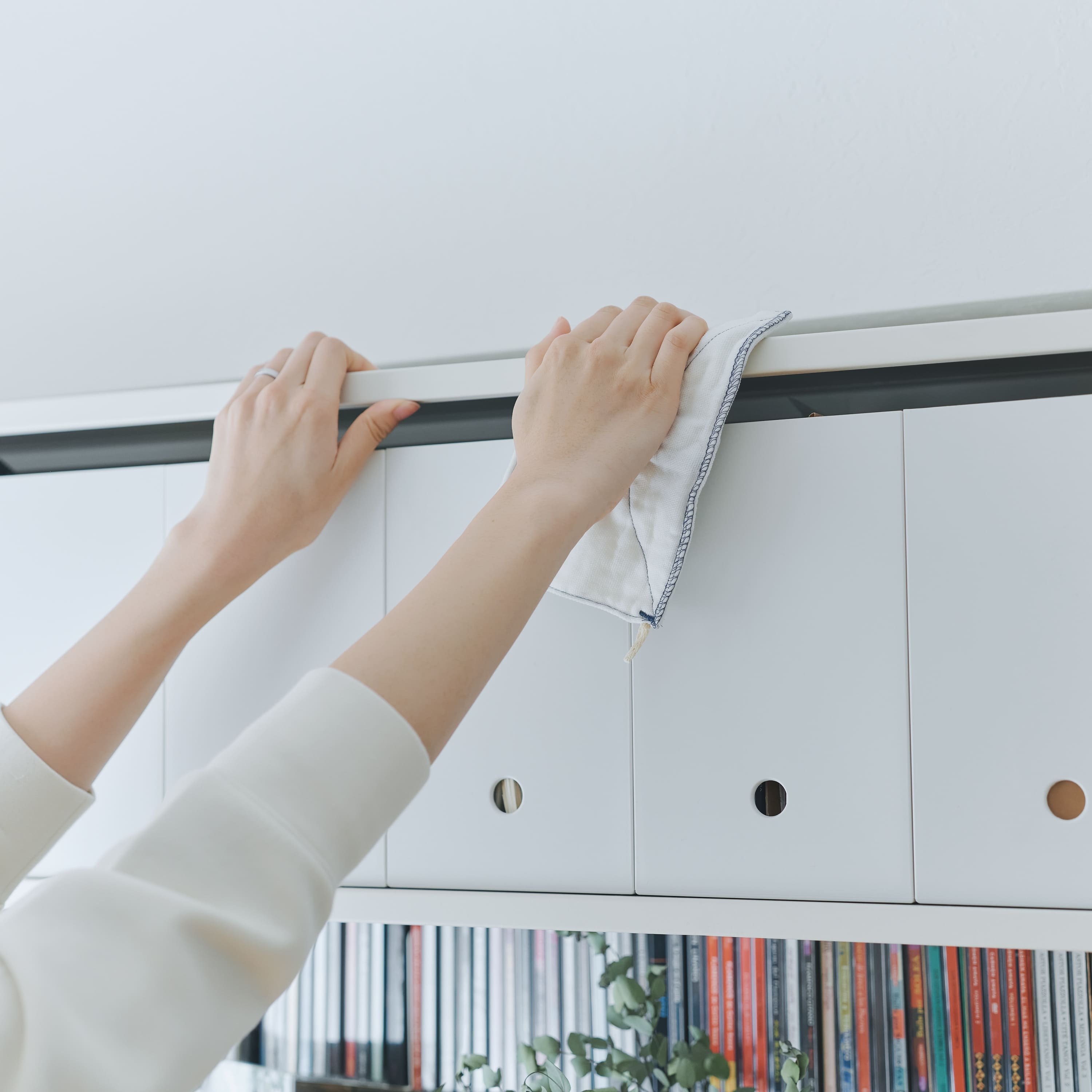
To perform a proper Oosouji, the first step is to completely clear out the cupboards. This allows for a deep clean of every surface while taking stock of what remains, but also to take stock of the items, identify duplicates, and mend or replace broken pieces. Beyond the material aspect, a mental analysis comes into play: it involves assessing what we actually use. This leads to a conscious reorganisation, tailored to the reality of our lifestyle. By moving away from ‘what one must have and use’ and towards what we actually want and do, this simple cleaning becomes a reconnection with oneself, a quest for authenticity. It aligns with the purifying aspect of Oosouji, which aims to rid spaces of the physical and spiritual impurities accumulated over the past year. This concept is linked to Shintoism, the traditional Japanese religion that places great importance on purity. At MUJI, cleaning is made easy with wipes for floors and surfaces, various mini-brushes for grout and other sponges.

3. Storing smartly for greater clarity
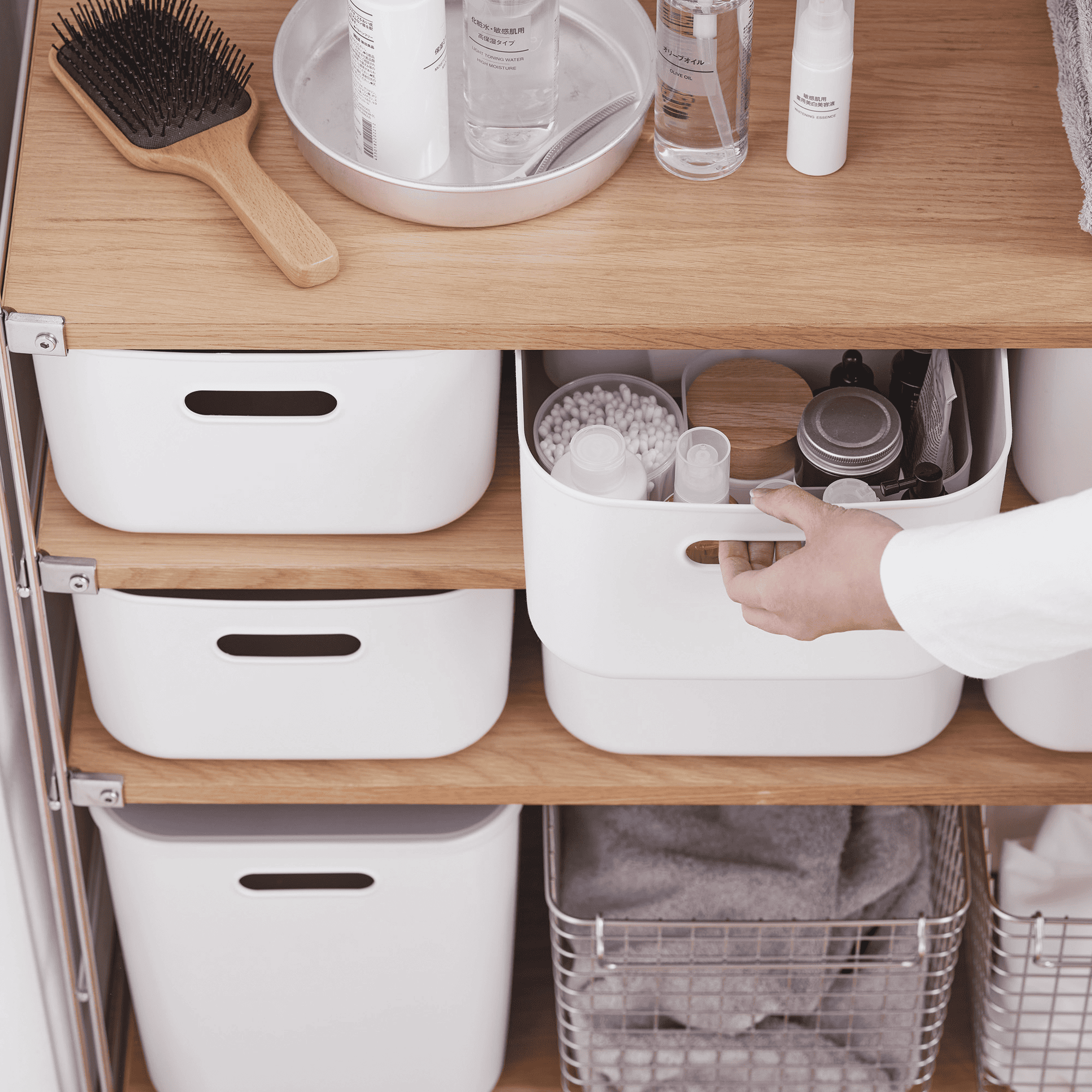
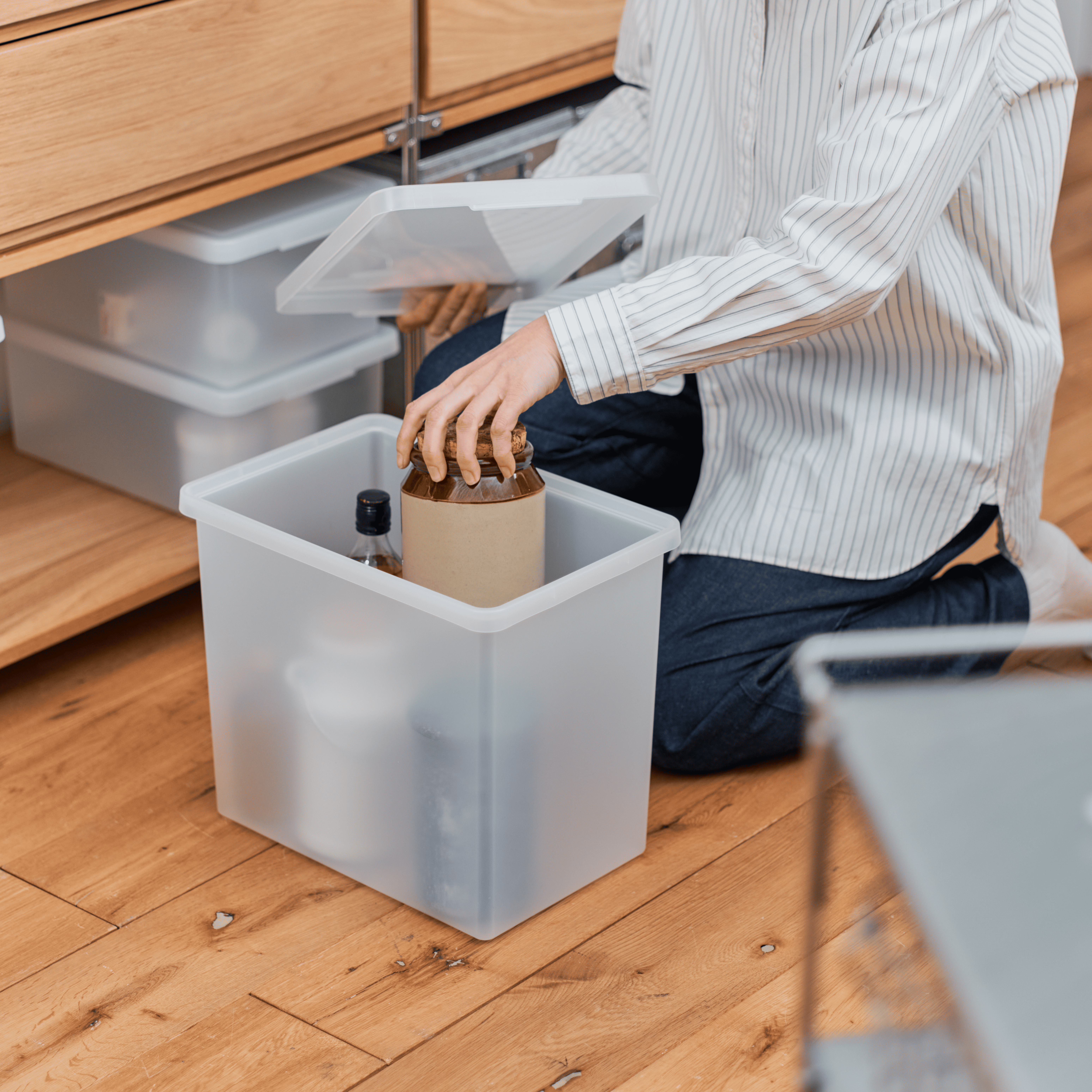
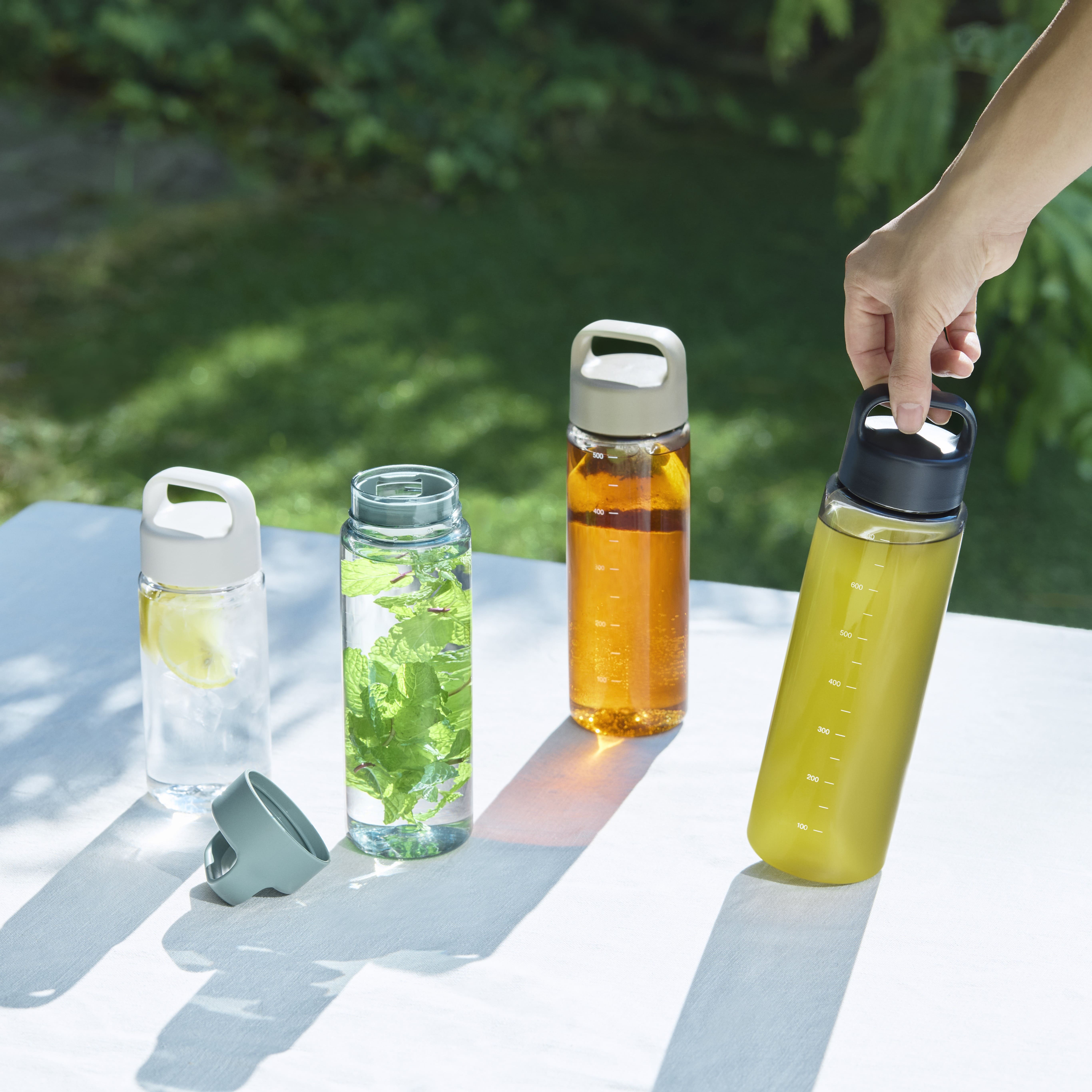
Once the space has been cleaned and sorted, it’s time to think about how to arrange the pantry and put the food back at the heart of the kitchen in a clear, simple and functional way. For a practical and streamlined daily routine, dry goods can be stored in stackable, uniform containers. When everything is within easy reach and in plain sight, food waste is reduced, unnecessary shopping is avoided, and meal preparation is optimised. With MUJI, shelves are filled with jars of all sizes, polypropylene storage containers in various shapes, polyethylene bins, metal storage baskets and a range of storage solutions for food and drink. Designed to combine practicality, durability and timeless design, the entire kitchen shelving system is neat, organised and harmonious. These storage boxes are for the kitchen, but above all they’re for a stress-free daily life.
4. Choosing useful and durable essentials
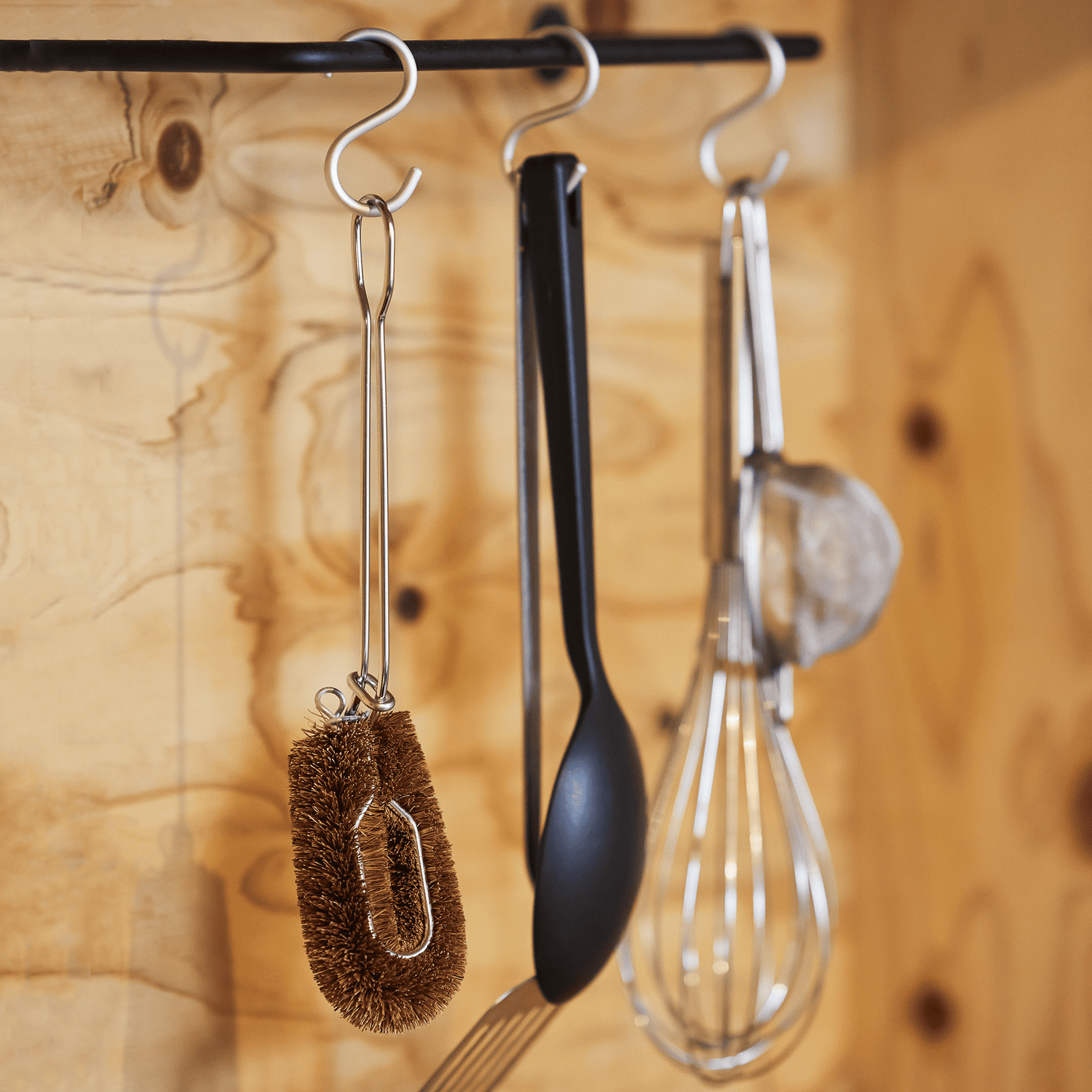
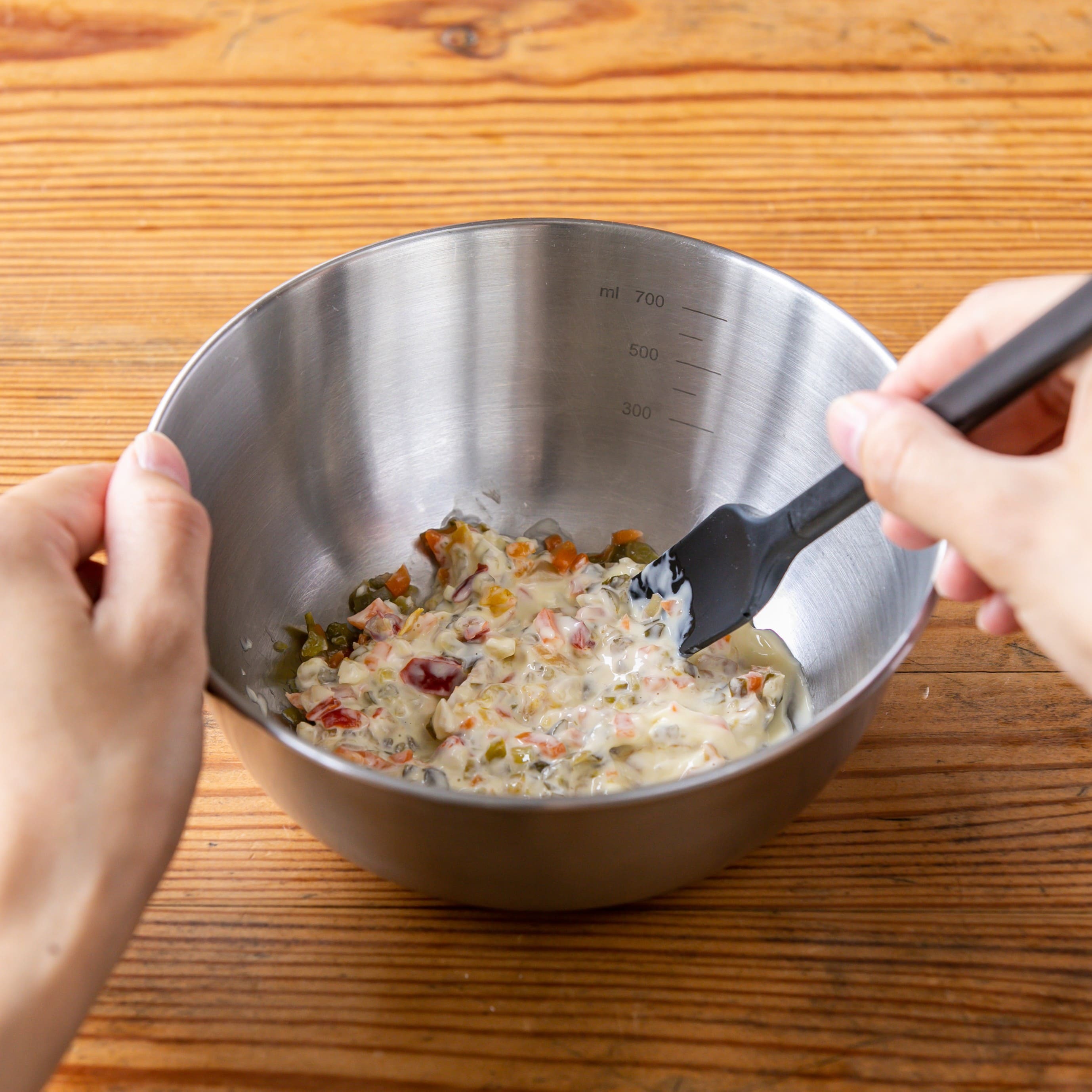
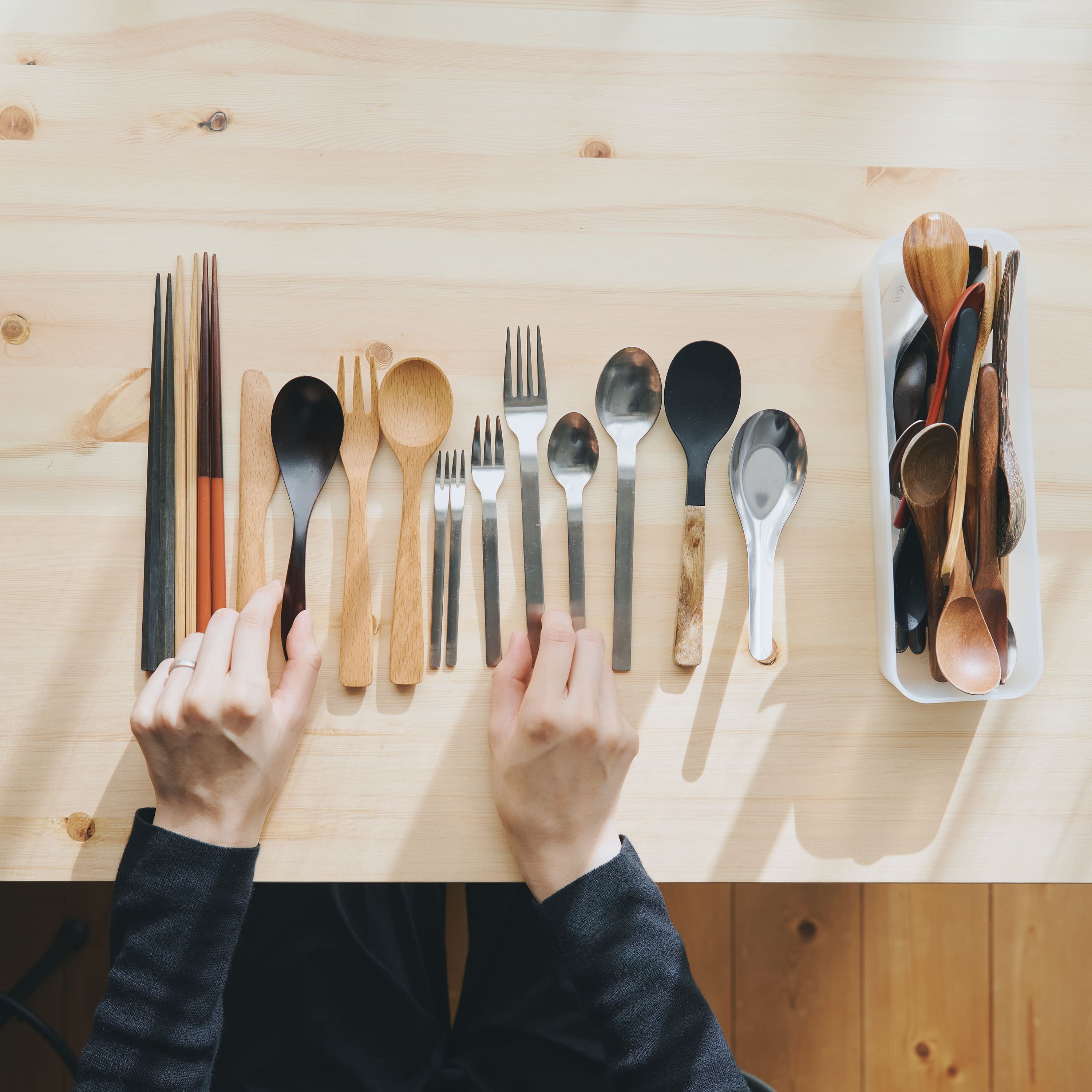
As the Japanese concept of Danshari suggests, decluttering a space requires careful consideration. And in the kitchen, this involves carefully selecting the right utensils. To avoid clutter, mess and unnecessary purchases of overly specialised tools, MUJI’s kitchen utensils are as versatile as they are functional. Made from high-quality wood or stainless steel, they are also durable and easy to maintain, helping to protect the planet’s resources. As always with MUJI, the idea is to prioritise quality over quantity. The aim is also to avoid cluttering the visual space with their presence: clear counter tops promote calm and serenity in everyday life. ‘Wasted’ or hidden spaces, under stairs pantry ideas, cupboards under the sink, high shelves, trays, utensil holders, drawer organisers… The kitchen is organised logically, with the most frequently used tools within easy reach.
5. The final touch: healthy habits and timeless tableware
Once the space has been perfectly – or imperfectly, as that’s part of life too – cleaned, sorted and organised, it’s time to enhance your daily life in the long term. Firstly, by maintaining this state of domestic harmony as much as possible through small habits. Sort through your belongings regularly, restock your cupboards mindfully, put everything back in its place, repair what needs fixing… Ultimately, ‘inhabiting’ your space means staying in touch with it. To complete the picture, simple, harmonious tableware takes its rightful place at the table, such as the Mino Ware pieces made from traditional Japanese ceramics, with their unique glaze variations. Durable, elegant and timeless, it suits every occasion with its wide range of designs and sizes. Even more understated, the everyday tableware range fits into any home with its neutral colours, simple lines, and dishwasher and microwave safety for added convenience.
Reset your kitchen
A space that is pleasant to live in is, above all, a kitchen lived in mindfully. Free from clutter, stocked according to need, and organised to suit each person’s lifestyle, it features fewer items and higher quality. Less perfection, and more functionality. With minimalist pantry storage, everyday life becomes easier and more peaceful – right there, at the very heart of the home.